


Contents Three Tools, Three Jobs
The same is true of the world's older knowledge systems. Tarot, astrology, and Qi Men Dun Jia get grouped together in the Western imagination, usually on the same shelf, usually with the same candle-lit aesthetic. But they were built by different cultures, for different purposes, and they answer different questions.
Tarot is strongest as a tool for reflection. Astrology describes temperament and longer cycles. Qi Men Dun Jia maps the forces inside one situation and resolves toward a move.
The useful question is not which system wins. It is which one matches the decision in front of you.
Three Tools, Three Jobs
The simplest way to hold the distinction:
-
Tarot is a mirror. It reflects your inner landscape back to you.
-
Astrology is a weather report. It describes the climate and cycles you are moving through.
-
Qi Men Dun Jia is a battlefield map. It lays out the forces in a specific situation and points to the advantageous move.
A mirror, a weather report, and a map are all useful. You would not navigate a mountain pass with a mirror, and you would not examine your own face with a map.
Tarot: The Mirror
Tarot deserves more respect than skeptics give it and more precision than enthusiasts sometimes claim for it. A tarot session works through archetypes, 78 cards carrying centuries of accumulated symbolic weight. When a thoughtful practitioner lays out the cards, what emerges is a structured conversation with your own intuition. Patterns you half-knew become visible. Feelings you had not named get named.
That is genuinely valuable. The cards give shape to associations, tensions, and feelings that may be difficult to examine while they remain unspoken.
Tarot is less precise when the question becomes operational. The cards can surface that you feel blocked in a negotiation. They are not structured to assign each party, resource, obstacle, and time window to a fixed position in the same chart. The Tower can tell you disruption is present. It does not tell you where to stand when it arrives.
Astrology: The Weather Report
Astrology is the most systematized of the Western tools, a genuine calculation-based discipline with thousands of years of observational refinement behind it. A natal chart offers a remarkably detailed vocabulary for temperament, and transit work describes the cycles a person is moving through: seasons of expansion, contraction, revision, consolidation.
Used well, astrology gives you climate awareness. Knowing you are in a consolidation season rather than an expansion season is legitimately useful context, the way a farmer benefits from knowing the almanac.
The scale it operates on is worth attention. Astrology describes broad weather over weeks, months, and years, anchored to your birth data, the same natal chart for your whole life. It characterizes seasons more naturally than it maps a single situation actor by actor. It can suggest that a period favors caution. It is less direct when the question becomes: cautious about which factor, in this specific deal, involving these specific people, and what do I do about it on Thursday?
Qi Men Dun Jia: The Battlefield Map
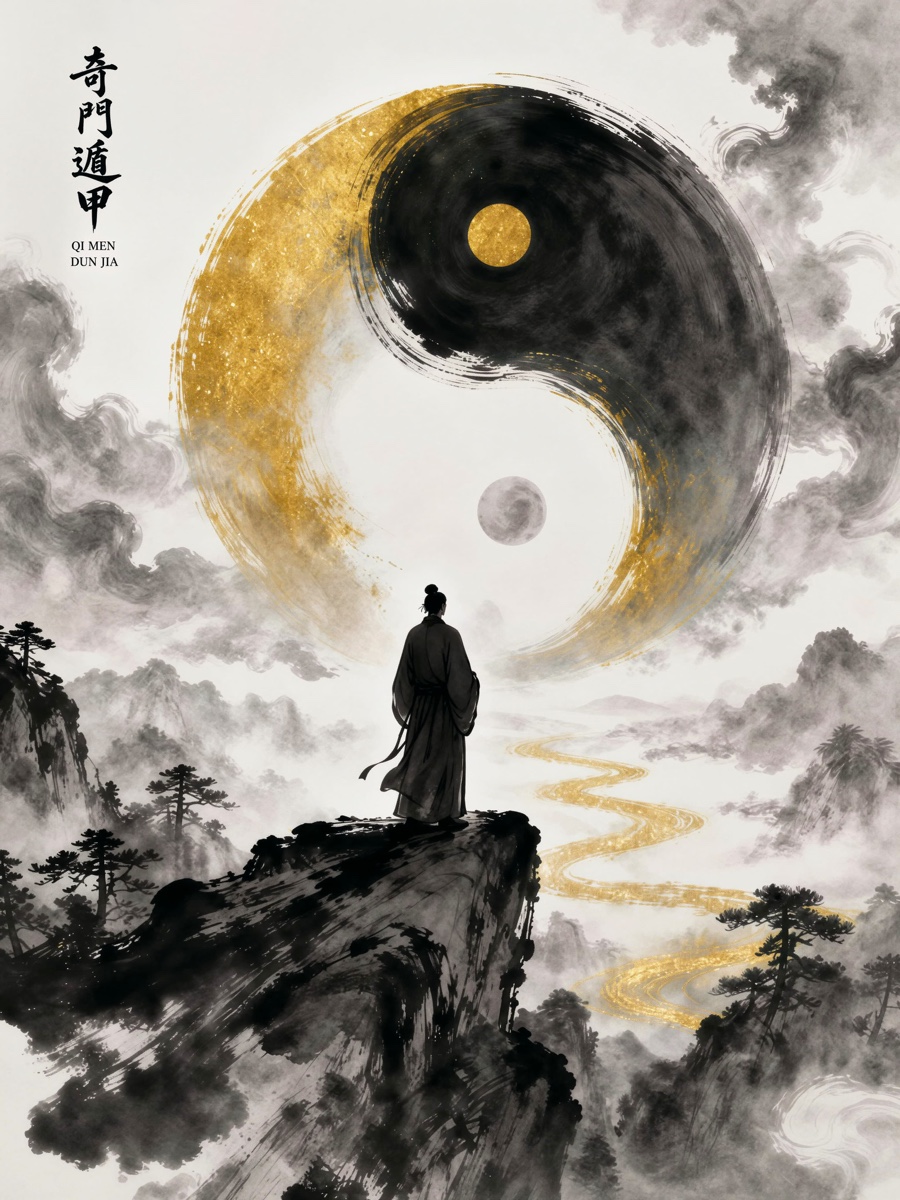
Qi Men Dun Jia comes from a different origin than either Western system, and the origin explains everything about its character. Related material appears in Han-era Chinese sources, and the system matured across the Tang and Song periods as a military and imperial planning discipline, famously associated with the strategist Zhuge Liang at the Battle of Red Cliffs. For most of its history, teaching it to civilians was forbidden. Generals and court advisors do not need mirrors or weather reports at the moment of decision. They need to know the terrain, the actors, the timing, and the opening.
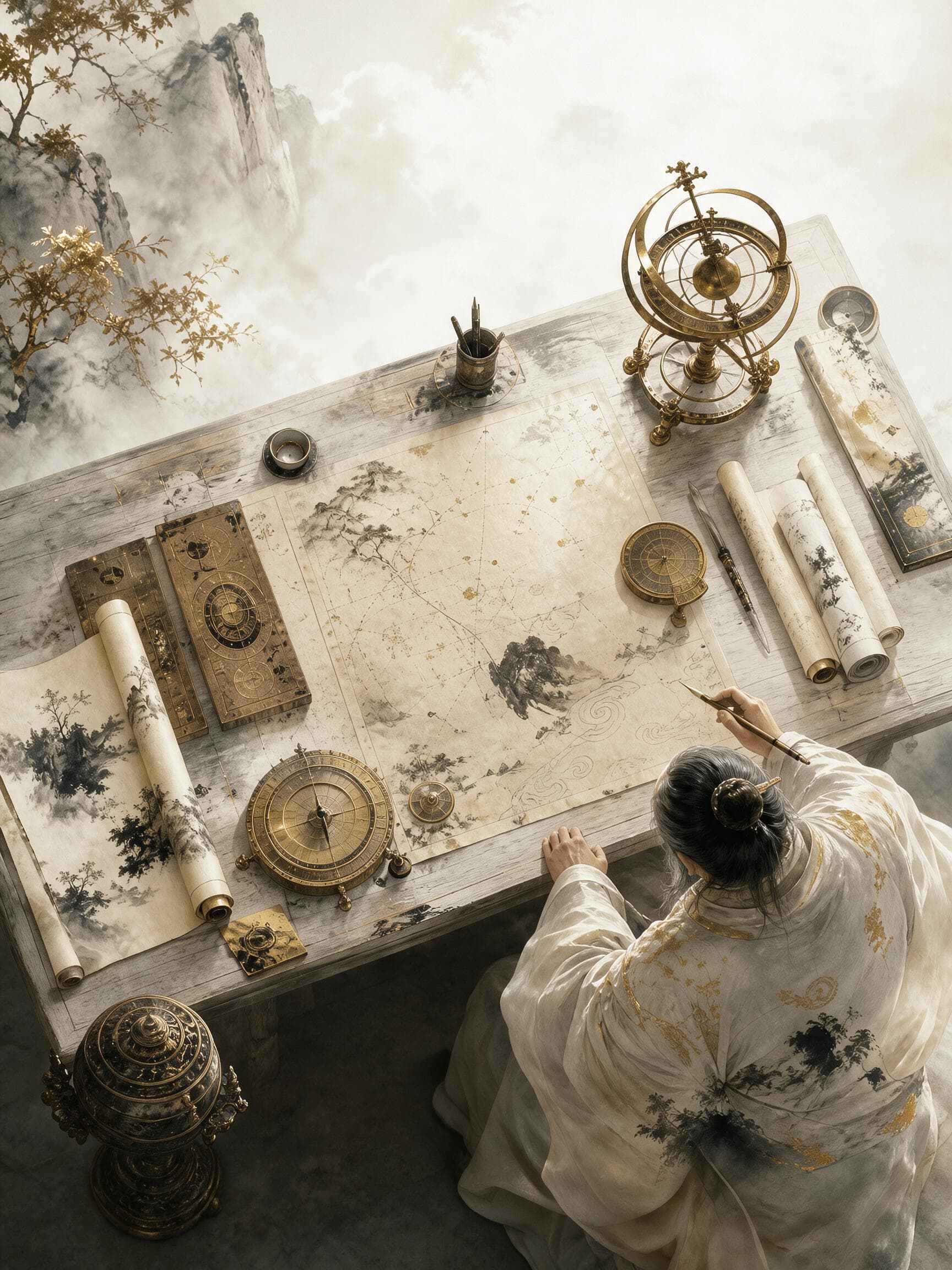
So that is what the system was engineered to model. A Qi Men chart is cast for a specific moment and a specific question, drawing on 1,080 possible configurations that shift every two hours under the traditional Chinese double-hour system. The chart assigns positions to the elements of your actual situation, you, the counterparty, the resource, the obstacle, and shows how force flows between them. Explore the full method.
The framework underneath it holds that any outcome is shaped by three roughly equal forces: Heaven for timing, Earth for position, Human for action. Most Western advice concerns only the Human third. Qi Men Dun Jia was built to work all three at once.
The practical difference is directional. Tarot tells you to be cautious. Qi Men Dun Jia shows you which factor creates the resistance, and the move that shifts it.
The Comparison at a Glance
| Tarot | Astrology | Qi Men Dun Jia | |
|---|---|---|---|
| Origin | European, ~15th century | Babylonian/Hellenistic, ~2,000+ years | Chinese, Han-era antecedents, codified Tang–Song; imperial and military use |
| Core function | Reflection and self-inquiry | Cycles, temperament, timing climate | Situation mapping and decision support |
| Input | Cards drawn in the moment | Birth date, time, place | Exact moment of the question (double-hour system) |
| Time resolution | The present mood | Weeks to years | Two-hour windows |
| Structure | 78 archetypal cards | 12 signs, 10 planets, 12 houses | 1,080 chart configurations, nine palaces |
| Best question | "What am I not seeing in myself?" | "What season am I in?" | "What is the advantageous move here?" |
| Output | Insight | Context | A position and a direction of action |
| Built for | Contemplation | Orientation | Decisions |
The Distinctive Claim
Of these three systems, Qi Men Dun Jia is the only one originally built for decision-making and repositioning. Not adapted for it later. Built for it, under conditions where a wrong call cost armies.
That heritage shows in its architecture. It is situational rather than natal: the chart is about the question, not about you. It is time-sensitive at a granular level: two-hour windows, not year-long transits. And its output is inherently directional. Every chart resolves toward an assessment of where advantage sits and what movement the configuration favors. The system does not really have a mode for pure contemplation. It keeps asking the general's question: what now?
What that buys you is specific. Not reassurance, and not a description of your character, but an answer to a question with a deadline attached. Which of these two offers. Whether to move first or let them move. Whether this month is the window or the month after. Those are the questions the system was built to close, and closing them is a different service from being understood.
None of this diminishes the other two tools. A person navigating a difficult year might benefit from all three: tarot to understand what they feel, astrology to understand the season, and Qi Men Dun Jia when the moment comes to actually decide something.
Choosing the Right Tool
A simple heuristic:
- Tarot
Reach for tarot when the question is inward: What do I actually want? What am I avoiding?
- Astrology
Reach for astrology when the question is seasonal: What kind of period is this for me? What is this year's texture?
- Qi Men
Reach for Qi Men Dun Jia when the question has stakes and a deadline: Should I take this offer? How do I approach this negotiation? Is this the window, or do I wait?
In East Asia, that third category has quietly relied on Qi Men Dun Jia for centuries, and business communities in Hong Kong, Taiwan, Singapore, and Malaysia still use it that way today. In the West, access to the discipline at a serious level has been nearly nonexistent. It was carried in family lineages, taught by referral, and rarely translated.
That is the gap Master Lee's practice exists to close: a 22nd-generation heir to one of those lineages, making the court's planning discipline available to people facing decisions that deserve more than a mirror.
Frequently Asked Questions
No, and the comparison is the wrong shape. They do different jobs. Tarot is built for self-examination, astrology for understanding the broad season you are in, and Qi Men Dun Jia for deciding a specific question with stakes attached. Asking which is better is like asking whether a hammer beats a level. The useful question is which one matches the job in front of you.
Yes, and many people do. They operate at different resolutions and answer different questions, so they do not contradict each other so much as address separate layers. Astrology describes the season; Qi Men Dun Jia maps a specific situation inside it. Someone using both typically consults astrology for orientation across a year and Qi Men Dun Jia at the moment a particular decision has to be made.
Astrology is natal and seasonal: it is anchored to your birth data and describes cycles spanning weeks to years. Qi Men Dun Jia is situational and granular: the chart is cast for the moment a question is asked, not for the person asking, and it changes every two hours. One characterizes the climate you are living in. The other maps a single situation and resolves toward a recommended move.
It depends entirely on what you need. If you want to understand yourself better, tarot or astrology will serve you well and are widely accessible. If you are facing a decision you cannot take back, and what you need is a position and a direction rather than insight, that is the narrow case Qi Men Dun Jia was engineered for.
Not quite. Chinese astrology usually refers to systems like Bazi or Zi Wei Dou Shu, which read a person's birth chart and describe their nature and life cycles. Qi Men Dun Jia belongs to a different branch: it is cast on the moment of the question rather than the moment of birth, and its purpose is situational strategy rather than personal description. The two are related fields within Chinese metaphysics but answer different questions.
When the Question Has Stakes
If you have one decision in front of you and need more than reflection or a broad forecast, explore Situation Shift. It applies Qi Men Dun Jia to one specific situation, the people inside it, and the move available now.
Explore Situation ShiftMaster Lee's work is a strategic guidance service. It is not medical, legal, financial, or psychological advice.